Tokyo Rose and History

the project history

video clips

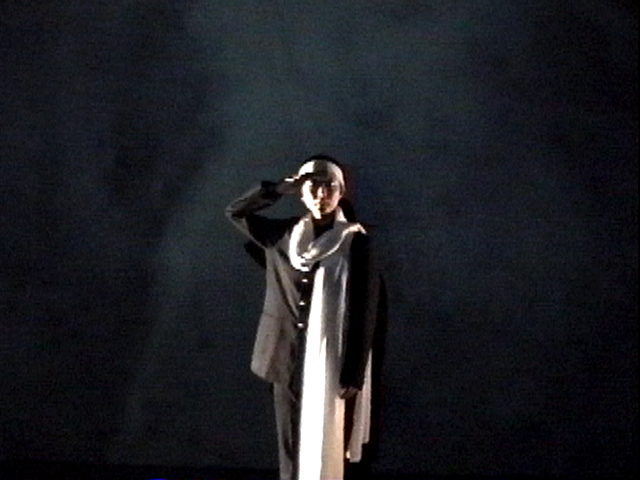
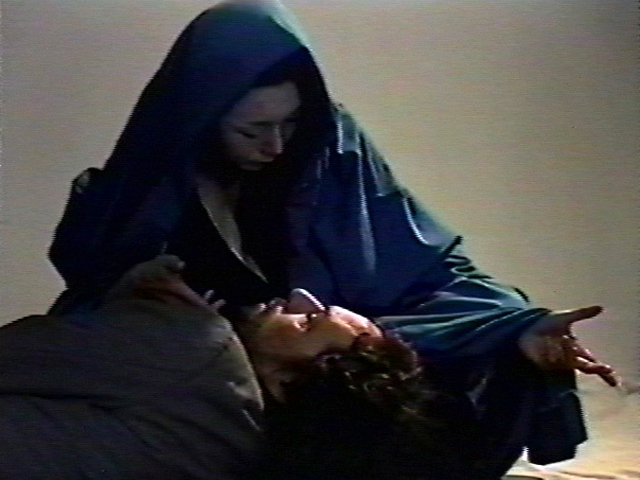
Tokyo Rose was inspired by the story of Iva Toguri, a second-generation Japanese-American whose trial for treason as the legendary radio siren/WWII propagandist foreshadowed the national security witch hunt of the McCarthy Era.

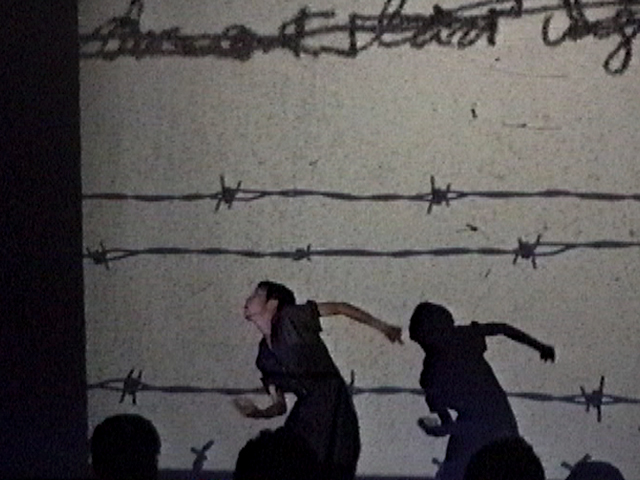
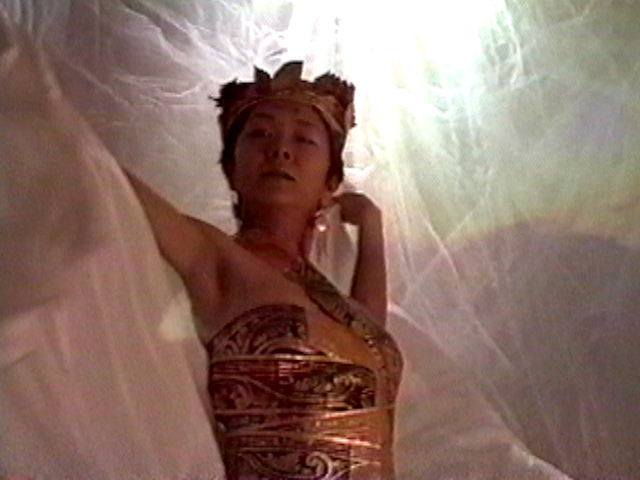
Weaving propaganda and anti-propaganda, the interdisciplinary work (music by John Payne; video, slide animation and choreography by Rika Ohara) explored forms of xenophobia - both cultural and sexual -- and the myth-making power of the media.

project:

The piece was developed in 1992-1995, premiering at Los Angeles Contemporary Exhibitions in January 1993 and the beta version shown at Japanese American Cultural Community Center in 1994. An excerpt was also shown at The Cleveland Performance Art Festival in 1992.

On the California Arts Council's Touring Roster ('95-'97) and venues around the world expressed their interest -- the American Center in Paris, ICA in London, The Walker Art Center in Minneapolis and The Kitchen in New York among them.

In February 1996, financial problems closed the Paris American Center's new, Frank Ghery-designed theater -- three months before the scheduled performances of Tokyo Rose. One "postponement" followed another, caused by loss of budget, change of personnel or both. (So I shot 2,000 new slides for a 1997 installation/performance of Shelter (Phase VII), adding digital video and reworking the choreography to an all-new musical score. For the rest of the history, please turn to the Shelter page.)

"I can't get it out of my mind. It's beautiful, extremely."
-- Anney Bonney, Hybrid Curator, The Kitchen, New York (1997)

"Tokyo Rose is a very interesting and emotionally moving project. I think the show is visually expressive enough that even non-English speaking audience can understand it."
-- Sophie Suissa, Performing Arts Coordinator, American Center, Paris (1995)

"Very compelling."
- John Killacky, Walker Art Center, Minneapolis (1995)

what it is:

90 minutes of wall-to-wall media (slides + video projections, layered) and pre-recorded audio and and dance. Mostly one live performer, two or three at the climax and several more in video. Text weaving historical propaganda, anti-propaganda and their modern-day "Trade War" versions -- not a straight biography. The 460 slides were programmed on an anaglog dissolve control whic used audible cues. The cues were recorded on the audio track of a VHS video cassette, while the video track was used to record PCM digital audio, thus synchronizing the slide projection and the sound recordings. The video for projection was contained in a second VHS tape played back on another machine. The two VHS players were synchronized simply by a remote control.

home